Screen your inbound dealflow faster — without missing the unicorn
EvalLens gives every inbound deck the same structured first read — on one consistent bar — so the breakout doesn't get skimmed. Screen a full batch in an afternoon; the final call is always yours.
What a screening batch looks like
- 1bar — no drift between decks
- 100%of inbound gets a real read, not a skim
- 0decks taken at face value
- 4–5 minmachine first-read per deck
- WHY MANUAL SCREENING BREAKS
Too much dealflow. Too little time to read it.
At volume, breakout decks get skimmed. The bar drifts between analysts, notes scatter, and the screen gets harder to defend to your IC and LPs.
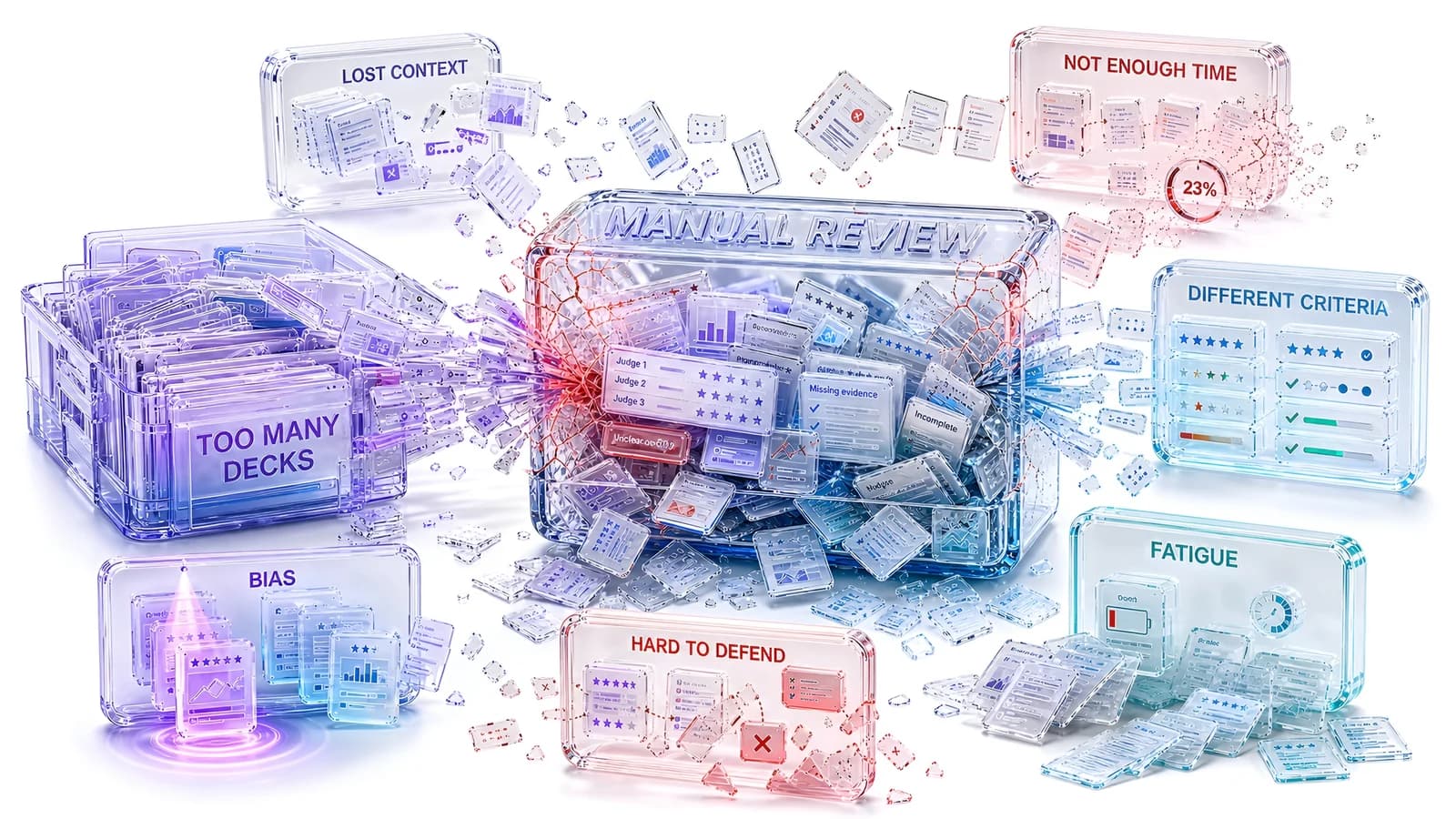
- Volume
Inbound never stops
More decks arrive each week than the team can read closely.
- Partner time
Partner time is the bottleneck
The first decks get a real read; the rest get a skim — and the breakout might be in the rest.
- The bar
The bar drifts
One analyst weighs traction, another the team — the screen isn't the same twice.
- Defensibility
Hard to defend the call
Months later, you can't reconstruct why a deck advanced — or died — for the IC or your LPs.
THE WHOLE LOOP, END TO END
How a single
screening runs
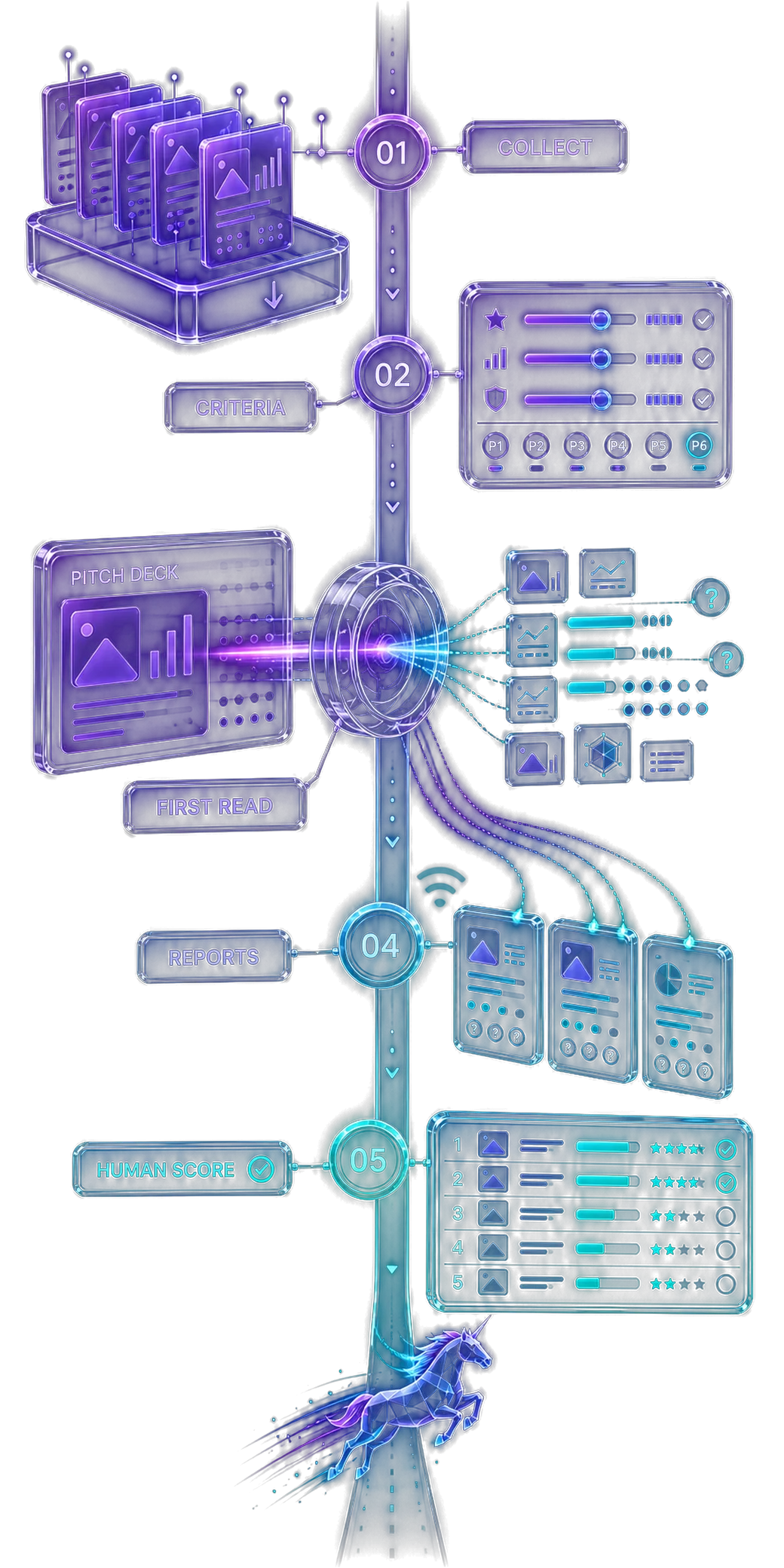
Set your bar once. EvalLens applies it to every deck and prepares what partners need to decide faster.
- 01
Collect the dealflow
Founders submit decks and you drop in inbound — everything lands in one place.
- 02
Set your thesis bar
Choose the scale, weights, and dimensions that match your fund's thesis.
- 03
Run the machine pass
EvalLens prepares a structured first read of every deck — about 4–5 minutes per deck after upload.
- 04
See the leaderboard
The whole batch ranked on your bar in one leaderboard — the field at a glance, top to bottom.
- 05
Share the memos with partners
Hand each deck's one-page screening memo — thesis, risks, gaps, and a recommendation to dig or pass. Partners verify and set the final score; the call stays human.
What the fund gets
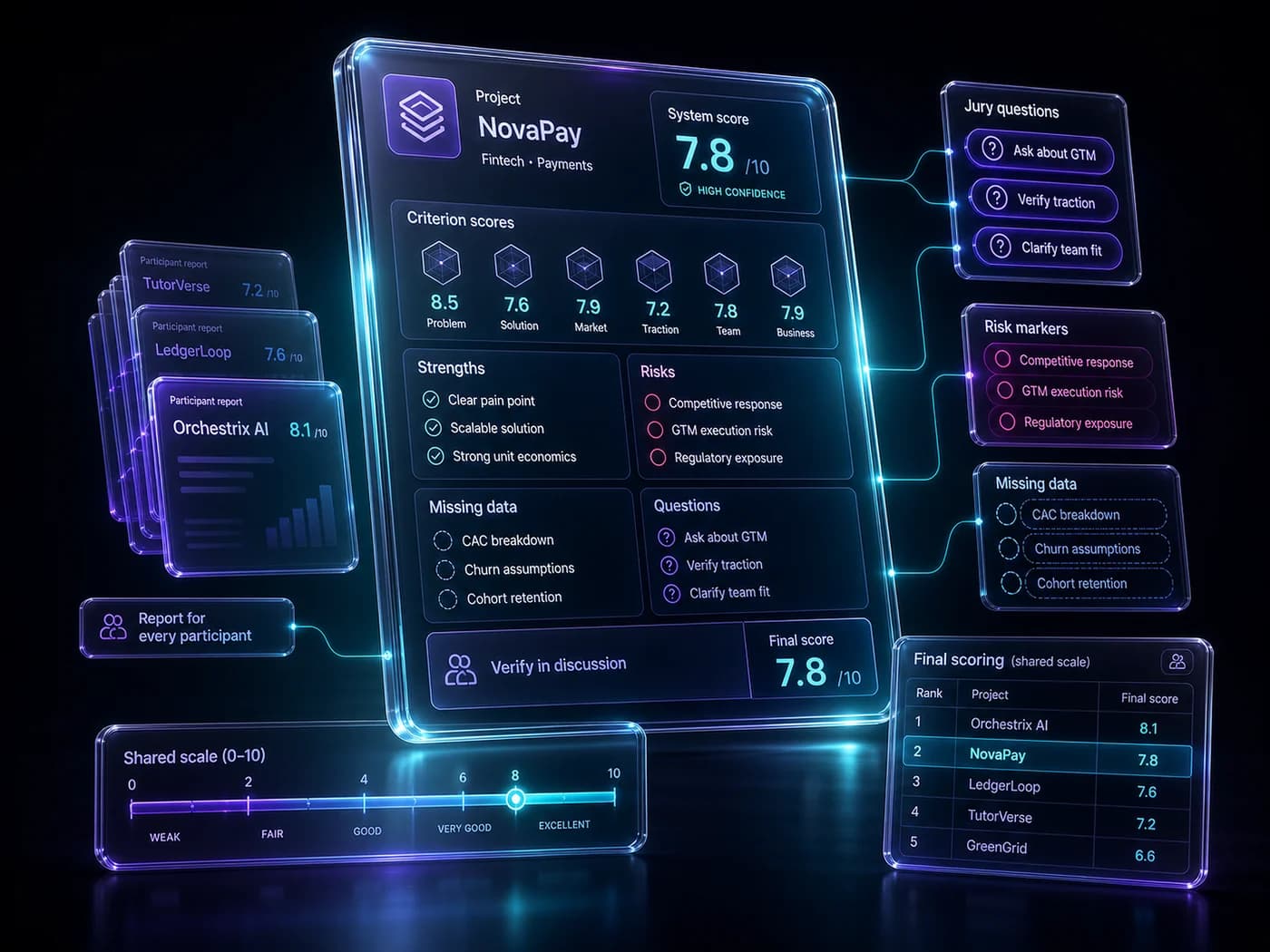
By the first screen, you have a working picture of every deck — before anyone commits diligence time. Each screening memo is built the same way, so startups compare side by side.
A memo for every deck
A ranked shortlist
Questions for the IC
Risks and missing data
One screening bar
Not a black box. Not a partner replacement.
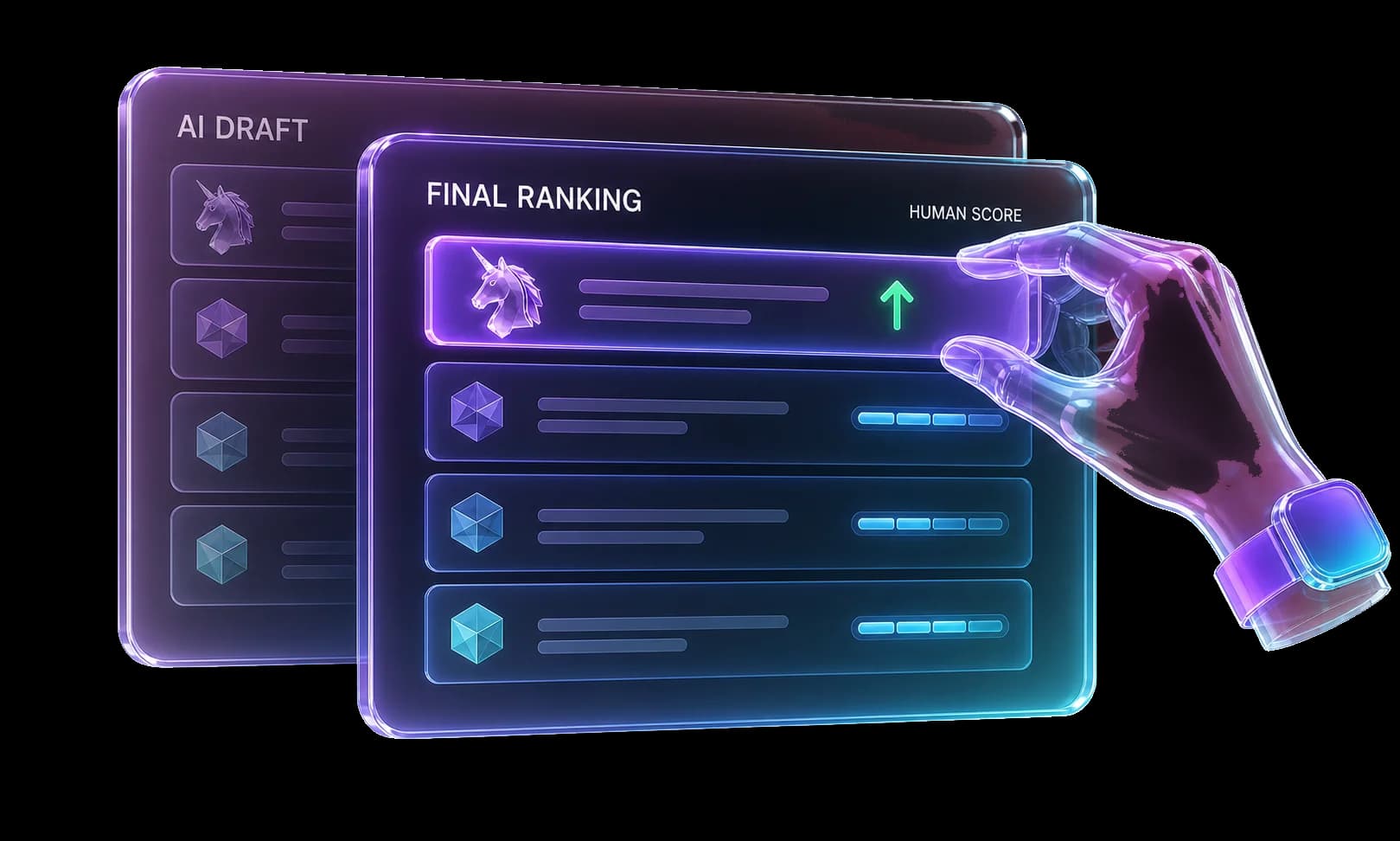
EvalLens prepares the analysis; it never makes the final call. It widens what your team can read closely — so the breakout gets the same first read as every warm intro.
- AI prepares
AI prepares the analysis
EvalLens lays out the evidence, the risks, and the questions — then hands them to the partners who decide.
- One bar
One bar for every deck
Every deck runs through the same scoring logic — the outlier gets the same first read as the warm intro.
- Defensible
Every score is cited
Scores trace to evidence in the deck — defensible to your IC and your LPs, not a gut call.
- Proven
Refined across hundreds of runs
The scoring logic isn't a v0 experiment — it's been tuned on real dealflow, run after run.
- Human
You set the final score
Control stays with the partners. The ranking runs on your call, not the AI's.
Built for how a fund screens
From the first inbound read to the IC meeting — one consistent bar across your whole dealflow.
- Inbound screening
Inbound screening
Every inbound deck gets the same real first read — so the breakout in the pile doesn't get skimmed while the team is buried.
- Thesis-fit filtering
Thesis-fit filtering
Score decks against your fund's thesis, not a generic rubric. Weight the dimensions that decide your investments.
- IC preparation
IC preparation
Every deck that clears the screen arrives with strengths, risks, and what to verify — so IC prep starts from substance, not a blank page. The full IC memo stays yours.
- Demo-day & batch review
Demo-day & batch review
Screen a whole cohort in one pass right after the pitches — every startup compared on equal footing.
Run a pilot on your real dealflow
We screen a real batch of your inbound, prepare partner-ready memos, and show how EvalLens ranks your dealflow — while the call stays yours. About 4–5 minutes of machine first-read per deck after upload. Refined across hundreds of runs.